
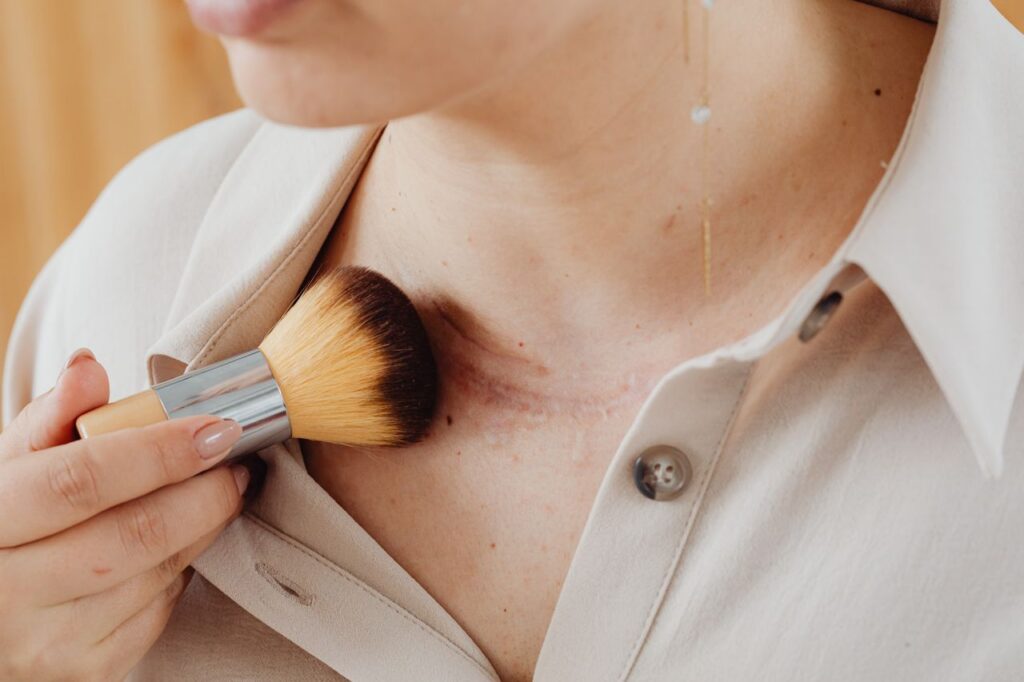
In most cases, effective scar revision does not require a board-certified plastic surgeon. In fact, invasive procedures might be the very reason you’re considering treatment today. Join us as we discuss what you can expect before, during, and after our most transformative non-invasive scar revision procedures.
What to expect before non-surgical scar revision
Ready to improve the appearance of facial or body scars? Here’s what you’ll need to do before scar revision to achieve the best possible after-effects:

Consultation
Before any scar revision procedure, you’ll have a consultation with a doctor, medical aesthetician, or other healthcare provider to determine the best treatment plan for your needs. This will include:
- Scar evaluation: Scar type, depth, age, color, and texture.
- Skin analysis: Skin tone, sensitivity, collagen health, and healing ability.
- Medical history: Previous procedures, current medications, topical products, and medical conditions can all impact which treatments are right for you.
Your provider will use this information to develop a treatment plan that includes a single modality or multiple techniques, and outline the number and frequency of sessions needed to achieve your desired results.
Preparation
Depending on the treatment plan determined in your consultation, you’ll receive specific guidelines for prepping your skin. Before most procedures, patients must avoid:
- Sun exposure
- Retinoids, exfoliants, and strong acids
- Blood thinners like aspirin and certain supplements
For resurfacing treatments, such as lasers and chemical peels, your provider may suggest a pre-conditioning skincare routine to support barrier health.
Procedure duration
Most scar revision treatments are relatively short. Here’s an overview of typical procedure times:
- Microneedling: 30 to 60 minutes. May require 3 to 10 sessions spaced 4 to 6 weeks apart.
- Laser resurfacing: 30 to 90 minutes. Expect 1 to 5 sessions spaced 6 to 12 weeks apart.
- Chemical peels: 30 to 45 minutes. Depending on the peel, you may see results in 3 to 10 sessions scheduled every 4 to 6 weeks.
- Injectables: 15 to 30 minutes. Dermal fillers require 1 initial treatment with maintenance every 6 to 18 months. Steroid injections for keloid scars can deliver results in 2 to 6 sessions spaced 4 to 6 weeks apart.
What to expect during scar revision treatment
While many patients focus on the before-and-after transformation from scar revision treatments, it’s also important to consider what happens during each session.
Microneedling or lasers
Microneedling and laser treatments are among the most effective scar revision services available for atrophic acne scars, stretch marks, and scars left behind after plastic surgery procedures, such as a brachioplasty, tummy tuck, or facelift.
Before your scar revision begins, your provider will apply a numbing cream that takes full effect after 20 to 30 minutes. They will then use a handheld device, like the VirtueRF microneedling wand or the Helix laser tool, to pass over your entire face, paying careful attention to areas with significant scar tissue.
Fillers
Though not ideal for icepick or keloid scars, dermal fillers can dramatically improve the appearance of atrophic scarring. During treatment, your provider will strategically inject small amounts of dermal filler beneath each scar.
It usually feels like a quick pinch or pressure, followed by a mild stinging sensation. The results are immediate, allowing you to monitor the effects in real time and adjust your treatment as needed.
Chemical peels
Chemical peels are typically gentler than other scar revision services, offering gradual results that develop over time. Highly effective for dark spots, discoloration, and superficial acne scars, these treatments can help you reveal smoother, brighter skin.
Your skin will be cleansed and prepped before a chemical solution is applied in layers. It might feel tingly or warm as it takes effect. Then, the solution is neutralized or removed.
What to expect after your treatment
How you care for your skin after scar revision treatment is just as important as the prep before your session. Let’s explore the aftercare period.
Initial recovery
While dermal fillers cause minor swelling and tenderness, skin may require a little more TLC after resurfacing treatments. Expect redness, tightness, and even some flaking or peeling after microneedling, lasers, and chemical peels. Your skin should bounce back completely in five to seven days, depending on the intensity of your facial service.
Scar revision aftercare
In the days after scar revision, sun protection and inflammation control are crucial. Avoid direct sun exposure, and wear plenty of high-SPF sunscreen each day. Stick to a gentle skincare routine focusing on hydration and barrier support. And be sure to avoid heat, sweating, and friction.
Long-term results
Dermal fillers provide instant results, but the effects of other procedures take more time to develop. You may see brighter, more even skin a week after your scar revision, but it will take months before new collagen becomes apparent.
It’s important to remember that scar revision does not necessarily mean scar removal. No matter which treatment you choose, it’s normal that some scar tissue will remain. You may not be able to eliminate any trace of the scar, but these services can drastically reduce its appearance by evening out skin tone and texture.
Enhance and rejuvenate with non-surgical scar revision at The Wellness Club!
Knowing how to care for your skin before and after scar revision puts you in the perfect position to achieve smooth, radiant skin. Book a consultation at The Wellness Club to learn more about your options!