
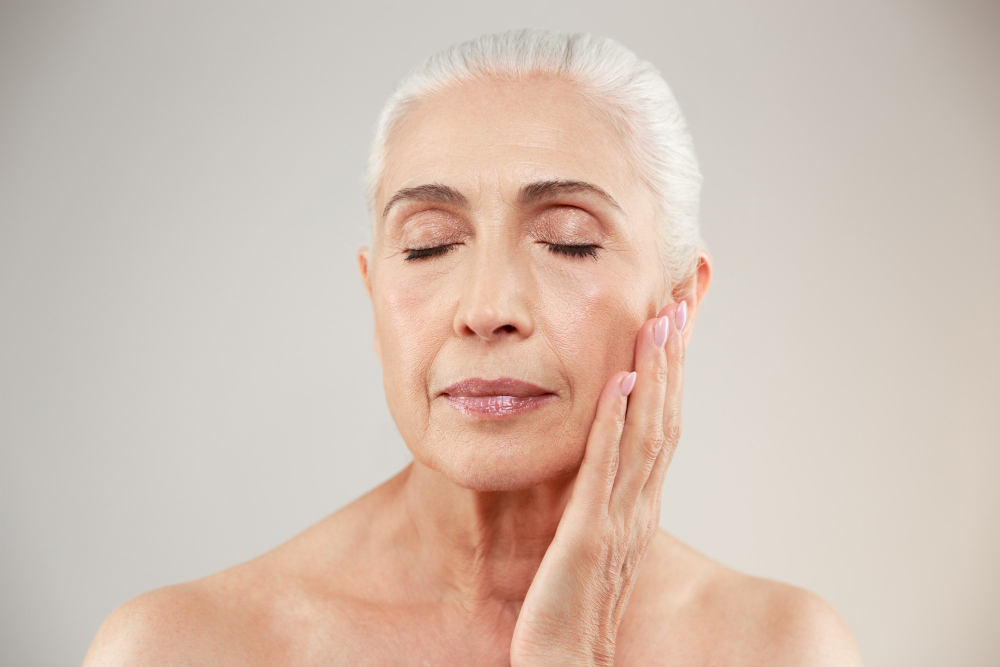
If you’re starting to notice volume loss, fine lines, and thin, saggy facial skin in the mirror, there’s a good chance depleted collagen is to blame. This connective tissue is the primary structural protein that keeps skin firm, smooth, and resilient, but natural levels can begin declining in early adulthood. So, how do you restore collagen in your face? Join us to learn which treatments and products can help you stimulate collagen production in order to counteract signs of aging.
What causes collagen loss in the face?
Even if you take collagen supplements and eat a diet rich in high-protein foods, you will eventually experience a drop in collagen production. Before we discuss how to restore collagen in the face, let’s explore why depletion occurs in the first place.
Hormonal changes and normal aging
Estrogen helps support collagen synthesis, which is why many women in perimenopause and menopause undergo dramatic changes in skin thickness and elasticity when these hormonal fluctuations begin. However, anyone who has the privilege of aging will naturally notice similar changes over time.
Sun exposure
Sun exposure is a leading cause of premature collagen loss, a process known as photoaging. When UV rays penetrate the skin, they generate free radicals and activate enzymes that break down connective tissues. Of course, UV damage is cumulative, and excessive exposure at any age can manifest later in life as rough texture, hyperpigmentation, skin laxity, and wrinkles.
Lifestyle factors
When it comes to premature aging, proper prevention requires a holistic approach. Poor diet, alcohol consumption, and smoking all increase oxidative stress, which can damage your DNA and contribute to the formation of severe medical conditions – the least of which are early signs of aging. Even seemingly innocuous factors like poor sleep and high-stress working conditions may inhibit your body’s resiliency.
But it’s important to remember that positive lifestyle changes at any age can benefit your mind, body, and skin.
What are the best professional treatments to restore collagen?
Ready to learn how to restore collagen in the face? Here are the best professional services to rebuild connective tissue and boost collagen levels:
Microneedling
Microneedling is also called “collagen induction therapy” for its transformative effects on tissue repair. This treatment uses super-fine needles to create controlled micro-injuries in the skin. The body responds with its natural wound-healing process, which stimulates the production of new connective tissues like collagen and elastin.
A treatment series can provide dramatic skin rejuvenation by:
- Improving skin texture and smoothness
- Softening fine lines and wrinkles
- Reducing acne scars and other forms of scarring
- Enhancing firmness and elasticity
- Tightening enlarged pores
Laser resurfacing
While sun exposure breaks down collagen and accelerates the aging process, laser skin resurfacing has the opposite effect. Both ablative and non-ablative treatments can restore collagen in the face to reduce fine lines and wrinkles, improve skin firmness, and repair signs of sun damage. Best of all, they can be customized to different skin types and cosmetic concerns.
Collagen biostimulators
Unlike traditional dermal fillers that plump the skin with hyaluronic acid, collagen biostimulators help your body produce new collagen to naturally rebuild volume. Products like Radiesse can be used to lift the cheeks, temples, jawline, hands, and other areas affected by volume loss. However, neither should be applied around the eyes.
What products should be in your skincare routine to help restore collagen in the face?
If you’re not quite ready for professional treatments, it’s possible to improve collagen reserves with the right at-home care. Here’s how to restore collagen in the face with topical skincare products:
Retinoids and retinol
Whether you use prescription retinoids like tretinoin or OTC retinols in your favorite anti-aging cream, you can enjoy the benefits of faster cell turnover rates and more robust collagen synthesis. These vitamin A derivatives penetrate the skin and bind to certain receptors in your cells, prompting fibroblasts to ramp up production of connective tissues.
Be sure to alternate retinoids with hydrating moisturizers to prevent excessive peeling and flaking.
Vitamin C
As a potent antioxidant, vitamin C protects the skin from damage caused by UV exposure and environmental pollutants, which accelerate collagen deterioration. It brightens the skin, minimizes hyperpigmentation, and improves overall radiance. But that’s not all. Your body can’t actually produce new collagen without vitamin C!
Products containing L-ascorbic acid are good sources of this antioxidant.
Peptides
Peptides are having a moment right now. You might find them in your cleanser, toner, or serum alongside other anti-aging ingredients. In general, peptides don’t directly stimulate collagen production, but they do reinforce overall skin health and cellular repair. Many of these products indirectly help support healthy collagen reserves and strong moisture barriers without causing irritation.
Rejuvenate and renew with personalized treatments at The Wellness Club!
Rebuilding facial collagen is one of the best ways to lift, plump, and revitalize aging skin. The Wellness Club offers customizable skincare treatments and topical products to help you restore collagen in the face. Begin your journey today!